DEI BARDI ART - FOCUS ON FLEMISH RENAISSANCE

04/05/2026
Dei Bardi Art presents an exceptional pair of Renaissance alabaster columns
at the heart of its focus
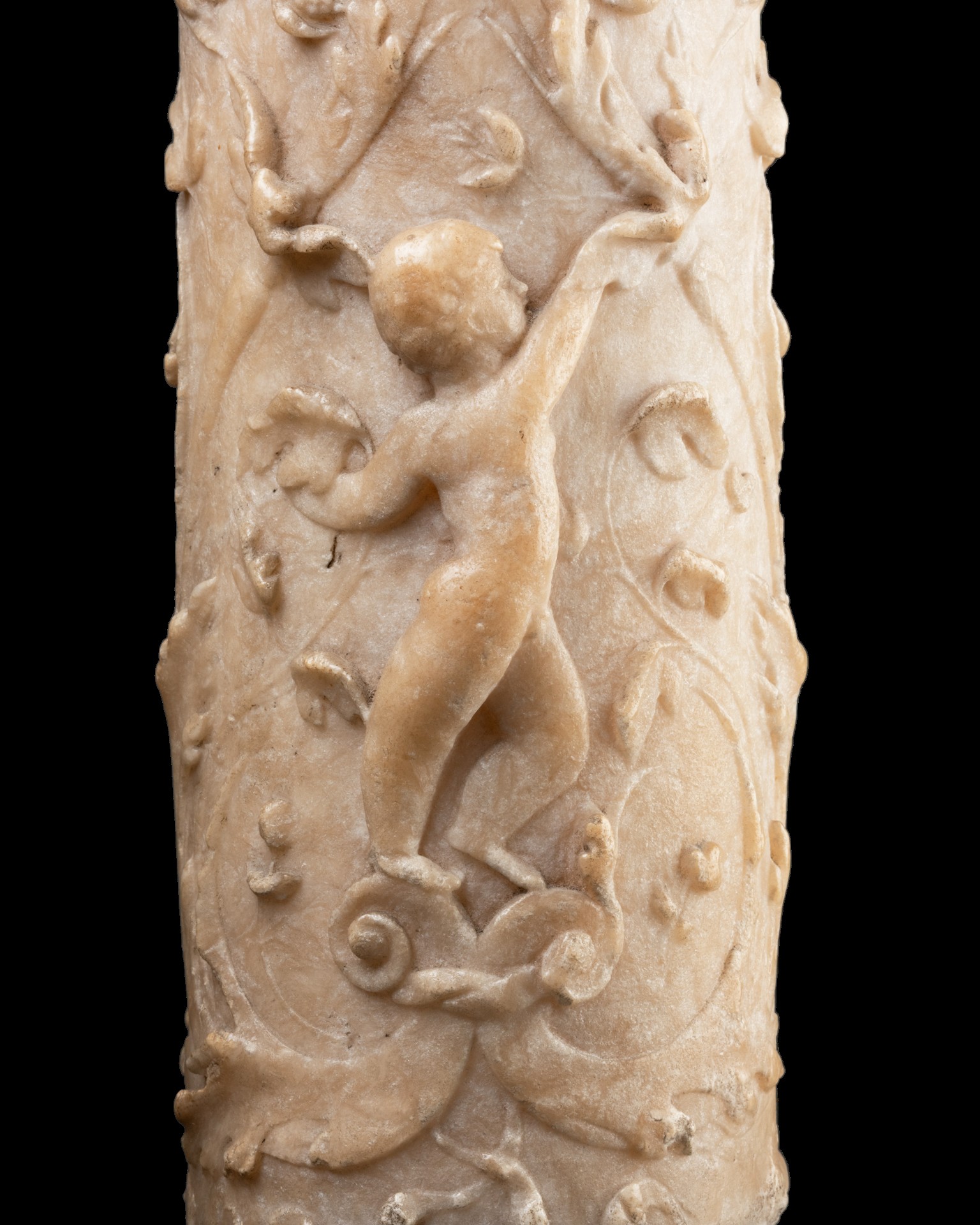
This refined pair of all’antica alabaster columns, richly carved with grotesque ornament, exemplifies the decorative vocabulary associated to Cornelis Floris de Vriendt (1514–1575) and the Antwerp school of the mid-sixteenth century.
Carved in alabaster with warm tonal variations, the columns are animated by scrolling rinceaux, acanthus leaves, masks, and putti entwined in foliage. The subtile relief and fluid composition reveal masterful control of light and shadow, characteristic of the grottesche idiom Floris helped to popularise north of the Alps. Disseminated through his engravings with Hieronymus Cock’s Aux Quatre Vents, Floris’s motifs inspired sculptors across Europe.
The Southern Netherlands were a key centre of alabaster sculpture, distinguished by exceptional refinement and finish, creating works destined for princely and ecclesiastical patrons. These columns reflect the Antwerp workshops’ sophistication and distinctive fusion of Italian Renaissance ornament with Northern sensibility.
These columns vividly translate Floris’s engraved grotesques into sculptural form. Their all’antica composition, rhythmic balance, and meticulous finish attest to the prestige of Antwerp’s workshops and to the enduring influence of Floris’s decorative genius—a style that defined what Robert Hedicke aptly termed “the age of the decorative” in sixteenth-century Northern Europe.
at the heart of its focus
This refined pair of all’antica alabaster columns, richly carved with grotesque ornament, exemplifies the decorative vocabulary associated to Cornelis Floris de Vriendt (1514–1575) and the Antwerp school of the mid-sixteenth century.
Carved in alabaster with warm tonal variations, the columns are animated by scrolling rinceaux, acanthus leaves, masks, and putti entwined in foliage. The subtile relief and fluid composition reveal masterful control of light and shadow, characteristic of the grottesche idiom Floris helped to popularise north of the Alps. Disseminated through his engravings with Hieronymus Cock’s Aux Quatre Vents, Floris’s motifs inspired sculptors across Europe.
The Southern Netherlands were a key centre of alabaster sculpture, distinguished by exceptional refinement and finish, creating works destined for princely and ecclesiastical patrons. These columns reflect the Antwerp workshops’ sophistication and distinctive fusion of Italian Renaissance ornament with Northern sensibility.
These columns vividly translate Floris’s engraved grotesques into sculptural form. Their all’antica composition, rhythmic balance, and meticulous finish attest to the prestige of Antwerp’s workshops and to the enduring influence of Floris’s decorative genius—a style that defined what Robert Hedicke aptly termed “the age of the decorative” in sixteenth-century Northern Europe.